This website uses cookies to improve your experience. We\'ll assume you\'re ok with this, but you can opt-out if you wish. Read More
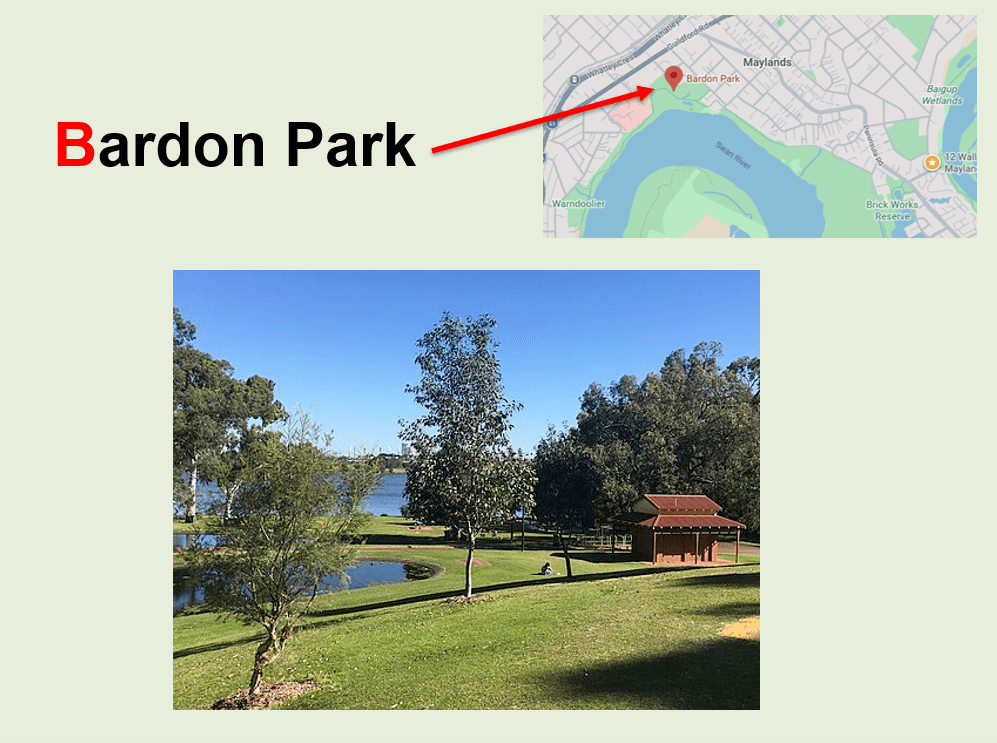
In 1829, Captain Stirling and his men took long boats up the Swan River as far as the Upper Swan, stopping overnight at what is now Bardon Park in Maylands.
The area between the St John of God Hospital and Fourth Avenue Maylands taking in Bardon Park and the foreshore reserve was apparently once designated as an Aboriginal Reserve.
Historically, riverside parks like Bardon Park developed as suburbs expanded in the early twentieth century. They reflected growing recognition that urban communities needed open space for health and recreation.
Located along the Swan River foreshore, it has long functioned as a place for:
- picnics
- organised sport
- family gatherings
- riverside walking
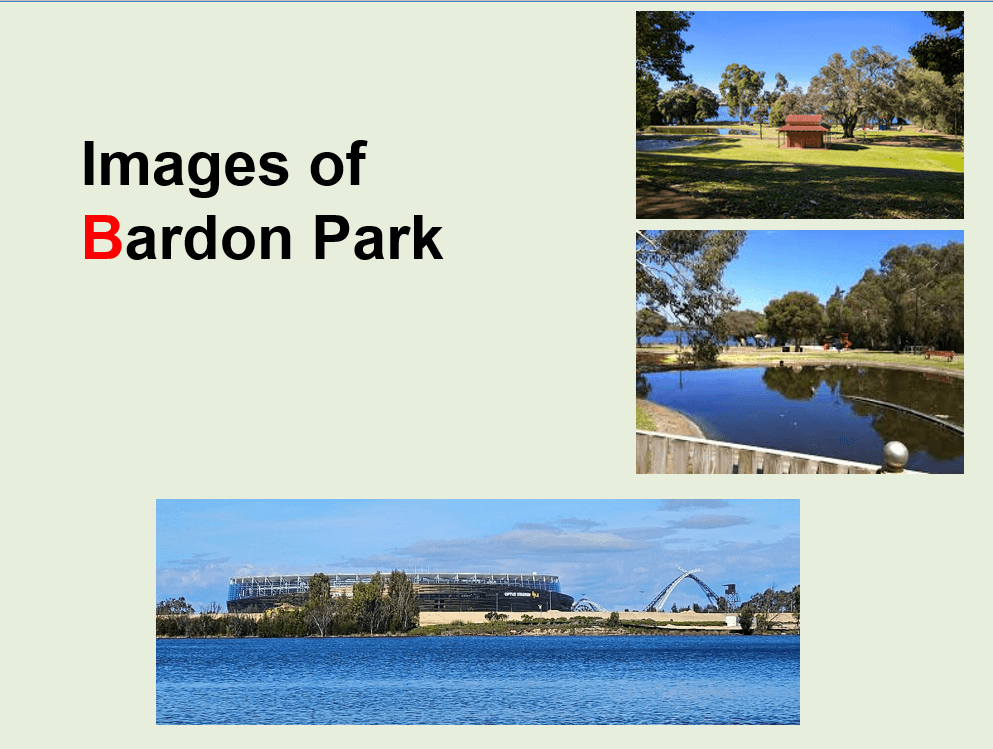
Today Bardon Park is one of the suburb’s most loved public reserves with its sweeping river views and a sense of openness that balances increasing urban density. It has playgrounds, barbecues and a carpark.
Signs near the upper playground in Bardon Park describe the 6 Noongar seasons and an entry sign shows the Park’s English and Noongar names.
The riverside bike path also runs through Bardon Park.
A Friends of Bardon Park group (FBPG) formed in 2016 to combat invasive weed in the Bardon Park wetlands.
In 2017, FBPG formed a 13-year partnership with the City of Bayswater, the West Australian Planning Commission and a private owner to address weeds such as pampas grass, lantana, blackberry bush and Japanese pepper tree.
See our Bardon Park Flickr Album for digitised images and other digitised information.