This website uses cookies to improve your experience. We\'ll assume you\'re ok with this, but you can opt-out if you wish. Read More
The De Lacy Family — A Maylands Sporting Dynasty
The De Lacy family’s sporting achievements in the early twentieth century placed both themselves and their suburb firmly on the map.
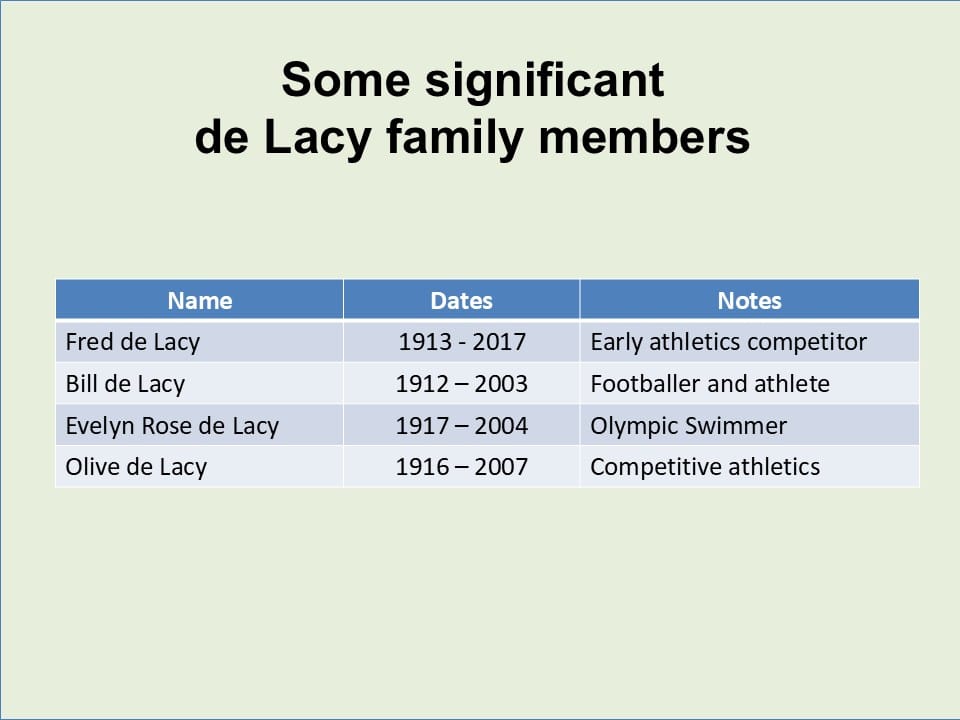
In an era when organised sport was becoming an important part of Australian identity, the De Lacys stood out as a true family of champions. Four siblings in particular — Bill, Fred, Evelyn and Olive — achieved success across athletics and football, gaining state, national and even international recognition.
They were not just talented individuals. They represented a moment in Maylands’ history when community pride, amateur sport and personal determination came together in powerful ways.
Perhaps the most famous of the siblings was Evelyn Margaret De Lacy, born in 1917.
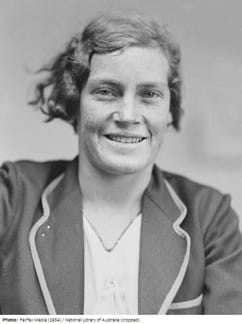
She became one of Western Australia’s greatest female sprinters — dominating state sprint titles during the 1930s.
Her career reached its peak when she represented Australia at the 1936 Berlin Olympic Games, competing in the women’s sprint relay.
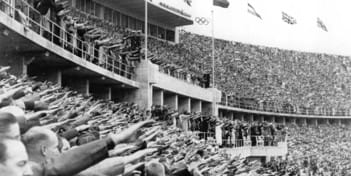
At a time when opportunities for women in elite sport were still limited, this achievement was extraordinary.
Evelyn’s Olympic participation not only brought prestige to her family — it also made her a trailblazer for women athletes in Western Australia.
She remained closely associated with athletics long after her competitive career ended.
Bill and Fred De Lacy — Football and Athletic Success
Her brothers Bill and Fred De Lacy were also outstanding sportsmen.
Bill De Lacy, born around 1912, gained prominence as a footballer and athlete.
He played at senior level during an era when local football competitions were fiercely contested and hugely important to suburban identity.
Fred De Lacy, slightly older, also excelled in competitive sport — particularly athletics — and helped establish the family’s reputation for physical talent and discipline.
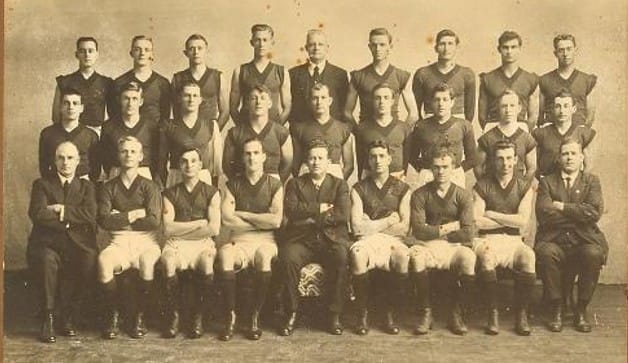
Together, the brothers contributed to Maylands’ standing as a suburb producing strong sporting competitors.
Olive De Lacy — A Champion in Her Own Right
Olive De Lacy, another sibling, also competed successfully in athletics.
Though less publicly celebrated than Evelyn, she was part of the same competitive environment — a family culture where training, determination and participation were everyday realities.
The De Lacy household itself became something of a local legend — a place associated with trophies, training routines and sporting ambition.
A Family Legacy Honoured — De Lacy Reserve
Today, the memory of this extraordinary family lives on in De Lacy Reserve in Maylands.
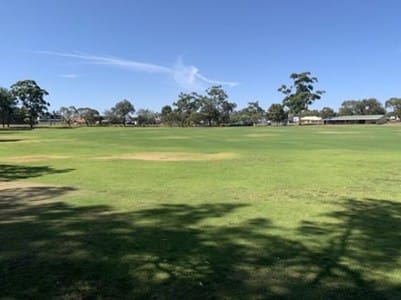
This quiet suburban green space stands as a reminder that local history is not just about buildings or events — it is also about people whose achievements shaped community pride.
The naming of the reserve reflects how strongly the De Lacy family influenced the cultural life of early twentieth-century Maylands.
Their story connects us to a time when representing your suburb in sport was one of the highest honours possible.
Conclusion
The De Lacys were more than successful athletes.
They were symbols of aspiration, perseverance and community identity.
From Berlin’s Olympic stadium to local football grounds and athletics tracks across Western Australia, their achievements showed what dedication could accomplish.
And today, whenever we walk through De Lacy Reserve, we are quite literally walking through a landscape of memory — one that honours a family who helped define Maylands’ sporting heritage.
Evelyn, Olive, Bill and Fred de Lacy were all noted swimmers.
Evelyn de Lacy (later Whillier) swam for Australia at the 1936 Olympics.
Olive was 12 years old when she completed her first Swim though Maylands and was the first woman to cross the finishing line in the 1934 Swim through Perth.
Bill de Lacy won the 1931 Swim through Perth.
Fred de Lacy was both a champion swimmer and a swimming coach who trained champion swimmers. Fred died in 2017.
See our De Lacy family Flickr Album for digitised images and other digitised information.